


Static vs In-Motion Dimensioning Systems: Which Is Right for Your Operation?

Static vs In-Motion Dimensioning Systems: Which Is Right for Your Operation?
At some point, most growing shipping operations hit the same realization: manual measurements are no longer cutting it. Carrier chargebacks creep in, throughput slows down, and consistency becomes harder to maintain.
That is usually when the question comes up — what kind of dimensioning system do we actually need?
And more importantly — which one won’t slow everything else down?
Not all solutions are built for the same environment. The real decision is not just about technology, but about how your operation runs day to day — your volume, your workflows, and whether your process is built around workstations or conveyors.
Both static and in-motion dimensioning systems solve measurement problems. The key is choosing the right static vs in-motion dimensioning system that fits your operation.
The Core Difference: Stationary vs Moving Measurement
The most important distinction between these systems is simple, but it drives everything else: whether your packages are measured while stationary or while moving.
Static dimensioners capture measurements while a package is at rest. In-motion systems capture dimensions while packages move along a conveyor at line speed.
That one difference affects throughput, accuracy, installation requirements, labor involvement, and overall cost.
Static Dimensioning: Where It Works Best
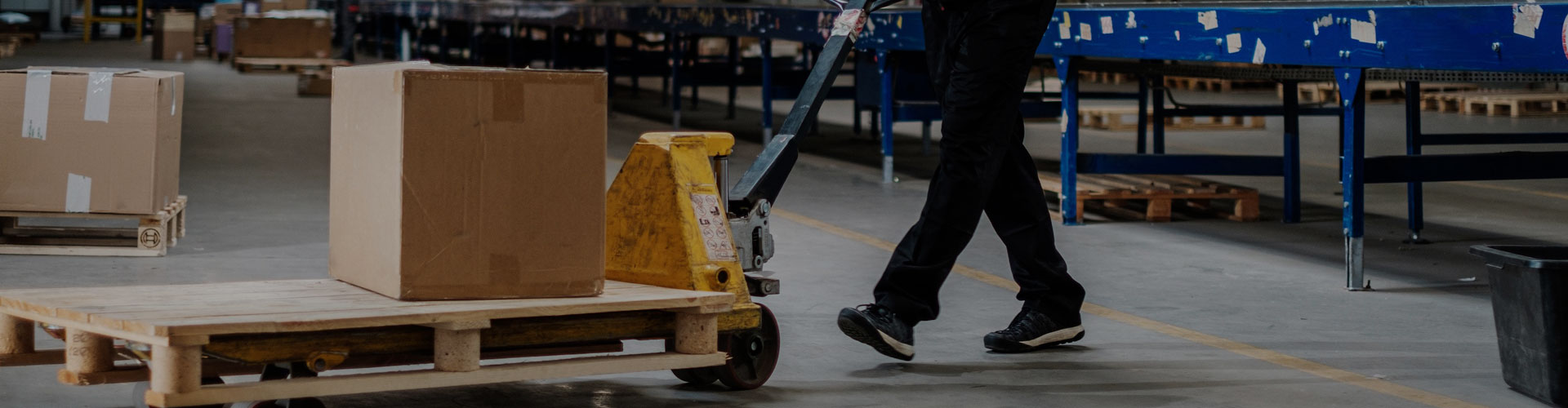
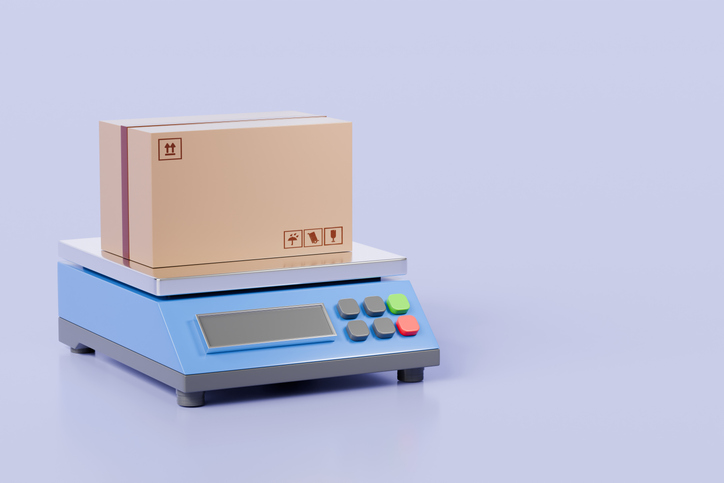
Static dimensioning measures packages while they are stationary — typically at a packing station, receiving area, or workstation where an operator is already handling the item.
In these environments, the package is placed on a measurement surface or presented to a sensor, measured, and then moved along to the next step.
Static systems tend to be the right fit when flexibility matters more than raw speed.
Where Static Dimensioning Excels
Static systems are commonly used in:
- Packing stations and fulfillment workstations
- Receiving and inbound processing areas
- 3PL and e-commerce fulfillment environments
- Operations handling mixed or irregular product types
Strengths of Static Dimensioning
- Higher measurement accuracy due to stable positioning
- Lower upfront cost with minimal infrastructure requirements
- Fast installation without conveyor integration
- Strong performance with irregular or soft packages
Limitations to Consider
- Throughput is limited by operator speed
- Each package requires manual handling
- Not designed for high-speed sortation environments
In-Motion Dimensioning: Built for Throughput
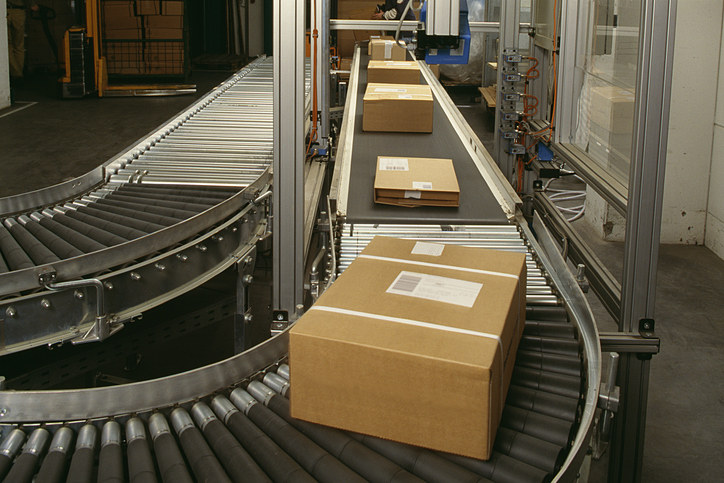
In-motion dimensioning measures packages automatically as they move along a conveyor system.
Sensor arrays are mounted above or around the conveyor, capturing dimensions in real time without stopping the package or requiring operator involvement.
In-motion systems are designed for operations where speed, scale, and automation are critical.
Where In-Motion Dimensioning Excels
In-motion systems are best suited for:
- Distribution centers and large warehouse operations
- High-volume fulfillment environments
- Conveyor-based sortation systems
- Operations processing thousands of packages per hour
Strengths of In-Motion Dimensioning
- High throughput capacity, often thousands of packages per hour
- Fully automated measurement with minimal labor involvement
- Seamless integration with conveyor workflows and sortation systems
- Real-time data capture for downstream systems
Limitations to Consider
- Higher upfront investment
- Requires conveyor infrastructure and integration
- Slightly reduced accuracy compared to static measurement due to motion
Static vs In-Motion: What Really Matters in Practice
When comparing static and in-motion dimensioning, the conversation often starts with features — but in reality, the decision comes down to how your operation actually functions day to day.
Static systems are built around control and flexibility. They measure each package while it is stationary, which supports consistent results across a wide variety of package types. This makes them especially effective in environments where workflows vary or product types are not uniform.
In-motion systems are built around speed and automation. They capture dimensions automatically as packages move through a conveyor system, allowing operations to maintain continuous flow without stopping for measurement.
In practical terms, the difference comes down to workflow design:
- Workstation-based operations tend to align naturally with static systems
- Conveyor-driven environments are better suited for in-motion systems
- Mixed product types often favor stationary measurement for consistency
- High-volume operations benefit from removing measurement as a manual step
Neither system is universally better — they are designed for fundamentally different operating conditions.
Key Factors to Consider Before Choosing a System
Choosing between static and in-motion dimensioning is less about comparing features and more about matching a system to how your operation actually runs.
Volume and Throughput Requirements
If your operation is consistently pushing the limits of what your team can process manually, that is usually a sign that measurement is becoming a bottleneck. In these cases, in-motion systems often make more sense because they remove measurement from the workflow entirely.
If volume is steady and manageable at the workstation level, static systems typically provide the right balance of accuracy and efficiency without requiring a major infrastructure investment.
Package Types and Variability
If you handle a wide range of package shapes, sizes, and materials, measurement consistency becomes more difficult when items are in motion. Static systems allow for more controlled measurement, which can help maintain accuracy across mixed product types.
If your packaging is more standardized and moves predictably through a conveyor system, in-motion dimensioning can handle that flow efficiently.
- Accuracy Requirements – If measurement precision is critical for billing, compliance, or inventory control, the stability of static measurement can provide a slight advantage. However, in-motion systems can still deliver compliant results when properly configured and calibrated.
- Integration With Existing Systems – If your operation is already built around conveyor automation, in-motion systems tend to integrate more naturally into that workflow. If your processes are centered around individual workstations, static systems are typically easier to deploy and maintain.
- Installation and Space Constraints – If your facility layout does not support conveyor integration, static systems provide a simpler and more flexible solution. In-motion systems require additional planning, installation, and infrastructure to function effectively.
- Scalability and Future Growth – If you expect shipping volume to increase significantly, it is important to consider whether your current workflow will scale. Static systems can support growth up to a point, but in-motion systems are designed specifically for long-term throughput expansion.
- Return on Investment – In lower-volume environments, static systems often deliver faster ROI due to lower upfront costs. In high-volume environments, the efficiency gains from in-motion systems can justify the higher investment over time.
Hybrid Setups: When You Don’t Have to Choose Just One
In many real-world operations, the decision is not strictly static or in-motion — it is a combination of both.
High-volume outbound shipping lines often rely on in-motion systems to maintain speed and eliminate bottlenecks, while static dimensioners are used in receiving areas, exception handling, or workflows that require more flexibility.
For example, an operation might use in-motion cubing on outbound conveyor lines to process thousands of packages per hour, while maintaining static systems at pack stations for irregular items or manual workflows.
This hybrid approach allows operations to balance automation with adaptability — applying the right type of measurement where it makes the most impact.
Choosing the Right Dimensioning Strategy With Dimensional Weighing
At this point, the decision between static and in-motion dimensioning usually comes down to one thing: how well the system fits your operation.
That is where having the right guidance can make a difference.
At Dimensional Weighing, we work with operations across a wide range of environments — from single-station packing workflows to fully automated, high-volume conveyor systems. That experience allows us to look beyond just features and focus on how your process actually runs day to day.
In some cases, the right answer is a straightforward static solution that improves accuracy without changing your workflow. In others, it may involve integrating in-motion cubing into an existing conveyor system to remove bottlenecks and increase throughput. And in many operations, a hybrid approach ends up delivering the best balance of flexibility and efficiency.
The goal is not to push one type of system over another. It is to identify where measurement is creating friction in your operation and match the right solution to that specific problem.
That process often includes:
- Evaluating current workflows and measurement pain points
- Reviewing shipment volume and growth expectations
- Identifying where automation will have the greatest impact
- Recommending solutions that align with both short-term needs and long-term scalability
When dimensioning is approached as part of a broader operational strategy — not just a piece of equipment — the results tend to be more consistent, more scalable, and easier to maintain over time.
Frequently Asked Questions
Can a static system be upgraded to in-motion later?
In most cases, no. Static and in-motion systems are fundamentally different in how they are installed, integrated, and used within a workflow. Static systems are designed for workstation-based environments, while in-motion systems require conveyor infrastructure and automation planning. If you anticipate moving toward higher throughput in the future, it is worth factoring that into your decision early so you can plan a smoother transition or hybrid approach.
Which system is more accurate?
Static systems generally provide slightly higher raw accuracy because the package is stationary during measurement, which reduces variability. That said, modern in-motion systems are designed to meet carrier compliance standards and can deliver highly reliable results when properly configured, calibrated, and matched to the right application. In most cases, accuracy differences are less about the system itself and more about how well it fits the workflow.
Do I need a conveyor system for in-motion dimensioning?
Yes. In-motion dimensioning systems are built specifically to operate within conveyor-based environments. They rely on controlled package movement and consistent flow to capture measurements accurately at line speed. Without a conveyor system in place, static dimensioning is typically the more practical and cost-effective option.
Can both systems be used in the same operation?
Yes — and in many cases, they should be. It is common for operations to use in-motion systems on high-volume outbound lines while maintaining static dimensioners at pack stations, receiving areas, or for exception handling. This hybrid approach allows you to apply automation where it improves throughput while keeping flexibility where your workflow requires it.
Talk With Dimensional Weighing About the Right System for Your Operation
If you are evaluating dimensioning solutions and trying to determine what makes the most sense for your workflow, volume, and infrastructure, this is exactly the kind of decision worth talking through.
At Dimensional Weighing, we work with operations at all stages — from replacing manual measurement at a single packing station to designing high-volume, conveyor-based systems.
Whether the right answer is static, in-motion, or a combination of both, our team can help you sort through the options and find a solution that fits how your operation actually runs.
Call 309-698-1500 or contact our team to find the right dimensioning solution for your operation.